
Article Contents
Day/Night Zoning for Efficiency
Importance of System Sizing
When choosing an air conditioning system, getting the size right is critical for comfort, efficiency, and long-term reliability. While system sizing is typically based on watts per square metre, several factors influence the final calculation. Insulation quality, ceiling height, wall materials, and window type all play major roles. Homes with poor insulation, high ceilings, or double-brick walls generally need larger systems to achieve consistent comfort. The cost difference between system sizes is often minimal. For instance, a 14kW and a 17kW unit may only vary by around $100-$300 a year in running costs. Given this small gap, oversizing can offer peace of mind and future-proof the system against added heat loads, renovations, or another user moving in the house. Conversely, a well-insulated home might run adequately on a slightly smaller unit, but this can risk underperformance during extreme temperatures.
We assess every home before quoting to recommend a size based on the factors above, to ensure we recommend the right balance between comfort and energy efficiency.
Understanding Zoning
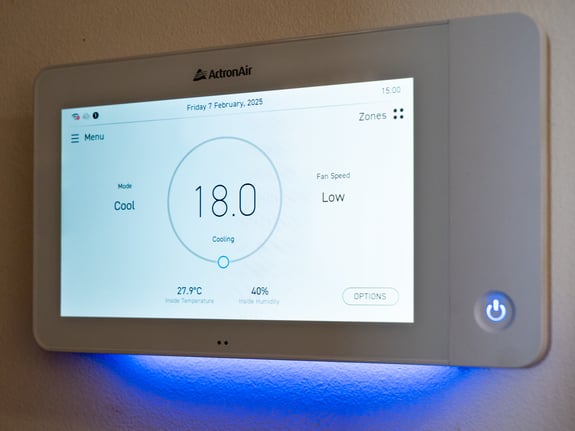
Zoning adds another layer of control and comfort. It allows you to heat or cool specific parts of the home independently (e.g. living areas during the day, bedrooms at night). While zoning isn’t designed to drastically cut energy bills, it greatly enhances comfort by ensuring the right areas are conditioned when needed.
Types of Zoning Systems
- Basic Zoning Systems: uses a single central controller to open or close different areas of the home.
- Temperature-Controlled Zoning: uses sensors in each zone to monitor and maintain consistent temperatures. This system is particularly useful for multi-level or irregularly shaped homes, where temperature variations are more common. However, when only one or two outlet remain open, airflow can become noisy, so careful design and usage is essential.
Day/Night Zoning for Efficiency
Day/night zoning is an efficient way to manage energy use without compromising comfort. During the day, the system conditions living spaces, and at night, it switches to bedrooms. This strategy can also help avoid the need for costly three-phase power upgrades. A moderately sized unit (such as 16kW) can handle both areas effectively by alternating zones, providing consistent comfort while keeping installation and operating costs manageable.
If you have any additional enquiries or if you’re still unsure, feel free to contact us by raising a Support Ticket and we can investigate your issue further.